
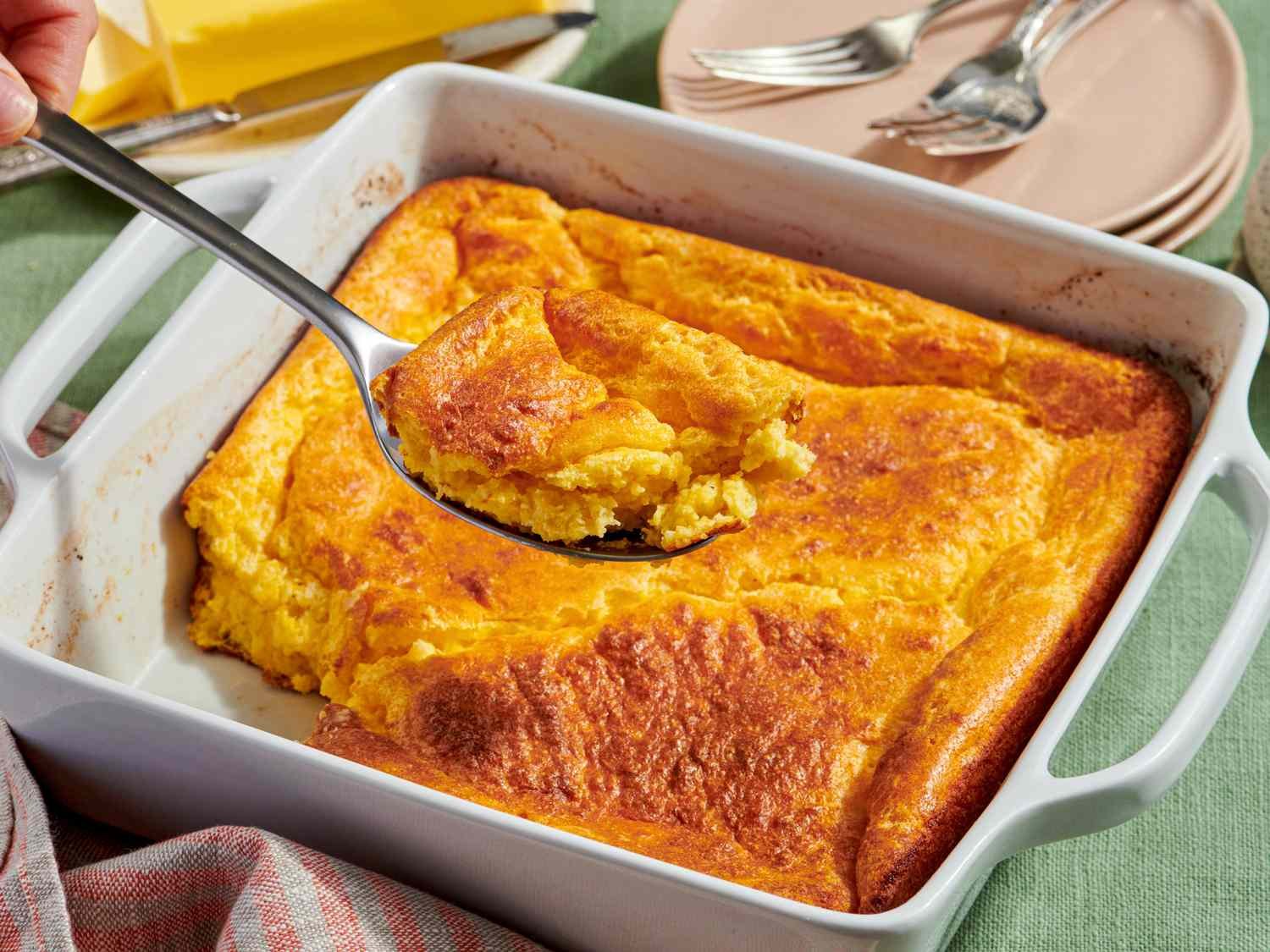
I still remember the first time I tasted real spoonbread at a family-style supper in a small Kentucky town. The waitress brought out a steaming casserole, and when I scooped a generous portion onto my plate, it quivered like a delicate soufflé yet felt deeply comforting, almost like a cross between cornbread and creamy grits. One bite with a pat of butter melting on top, and I understood why Southern cooks have cherished this dish for generations. Classic Southern spoonbread delivers a light, airy texture with rich corn flavor that pairs beautifully with everything from fried chicken to hearty stews. If you’re hunting for an authentic spoonbread recipe that rises beautifully and tastes like home, you’re in the right place.
What Exactly Is Classic Southern Spoonbread?
Southern spoonbread is a traditional side dish made primarily from cornmeal, milk, eggs, and butter. It bakes up soft and custardy rather than firm and crumbly, so you serve it with a spoon instead of slicing it. The beaten egg whites give it a light, almost soufflé-like lift, while the cornmeal base keeps it grounded in Southern comfort food traditions. It originated as a humble corn-based staple but evolved into something elegant enough for holiday tables or Sunday dinners. Unlike denser cornbread, spoonbread feels indulgent yet simple.
My First Spoonbread Memory and Why It Stuck
Years ago, during a road trip through the South, I stopped at a roadside diner famous for its Boone Tavern-style spoonbread. The server warned me it would deflate a bit as it cooled, but that only made the golden edges crispier against the creamy center. I paired it with collard greens and country ham, and the combination felt like a warm hug. Ever since, I’ve tinkered with the recipe at home, sometimes adding a pinch of sugar for my kids or keeping it savory for potlucks. That first experience taught me that great spoonbread isn’t just about following steps—it’s about creating something that brings people back to the table.
The Rich History and Origins of Spoonbread
Spoonbread traces its roots to Native American corn preparations that early European settlers in the South adapted and refined. Recipes for similar “batter bread” appeared in 19th-century cookbooks like The Virginia Housewife (1824) and The Carolina Housewife (1847), where it gained the name “spoon bread” for its soft, scoopable texture. It became especially popular in Virginia and Kentucky, with places like the Boone Tavern in Berea, Kentucky, turning it into a signature dish. Over time, it evolved from necessity-driven cornmeal mush into a lighter, egg-enriched delight that showcases Southern ingenuity with simple ingredients.
How Spoonbread Differs from Traditional Cornbread
Many folks confuse spoonbread with cornbread, but the differences shine once you taste both. Cornbread bakes firm enough to slice, often with a crispy crust from a hot cast-iron skillet, while spoonbread stays moist and pudding-like, relying on separated eggs for lift. Spoonbread uses more liquid and incorporates beaten whites for an airy rise, whereas cornbread leans on baking powder or soda for structure. Both celebrate cornmeal, but spoonbread feels more elegant and versatile as a side.
Why the Egg Whites Make All the Difference
Separating the eggs and whipping the whites to soft peaks is the secret to classic spoonbread’s signature lightness. The yolks enrich the base with richness and color, while the folded whites trap air that expands during baking, creating that delicate, soufflé-like texture. Skipping this step or overbeating the whites leads to a denser result that misses the magic. It takes a few extra minutes, but the payoff in fluffiness turns good spoonbread into unforgettable spoonbread.
Choosing the Right Cornmeal for Authentic Flavor
Stone-ground or water-ground cornmeal gives the best texture and true corn taste without grittiness. Fine to medium grind works well—avoid coarse polenta or grits, which won’t hydrate smoothly. White or yellow cornmeal both suit the recipe; white offers a milder flavor popular in some Southern regions, while yellow brings a slightly sweeter, more vibrant color. Fresh cornmeal from a local mill or reputable brand makes a noticeable difference over stale pantry staples.
Essential Ingredients for Classic Southern Spoonbread
For a 2-quart baking dish serving 6–8 generous portions, gather these pantry-friendly items:
- 1 cup fine or medium cornmeal
- 3 cups whole milk (or a mix with buttermilk for tang)
- 3 large eggs, separated
- 2–3 tablespoons unsalted butter, plus more for greasing
- 1 teaspoon salt
- 2 teaspoons baking powder
- Optional: 1–2 teaspoons sugar for subtle sweetness, or a pinch of black pepper
These create the perfect balance of creamy corn flavor and light structure.
The Crucial Step of Scalding the Milk and Cornmeal
Bring most of the milk to a gentle boil or scald, then slowly whisk in the cornmeal to create a thick porridge. This pre-cooks the starches, eliminating any raw, gritty texture while building a smooth, custardy base. Let the mixture cool slightly before adding egg yolks, butter, and seasonings. Rushing or skipping the cooling can cook the yolks prematurely and deflate your final rise.
Step-by-Step Guide to Baking Perfect Spoonbread
Preheat your oven and grease a 2-quart baking dish or cast-iron skillet. Scald the milk, stir in cornmeal until thickened, then incorporate butter, salt, baking powder, and egg yolks. In a clean bowl, beat egg whites to soft peaks and gently fold them into the cooled cornmeal mixture. Pour into the prepared dish and bake at 375–400°F for 35–45 minutes until puffed, golden, and just set in the center with a slight jiggle. Serve immediately for the best texture.
Common Mistakes That Ruin Spoonbread Texture
Overmixing after adding the whites knocks out precious air and leads to a heavy, dense dish. Using cold eggs or milk prevents proper emulsification and rise. Baking too long dries out the center, while underbaking leaves it too soupy. Not preheating the baking dish can result in uneven cooking. Pay attention to these details, and your spoonbread will rise reliably every time.
Delicious Variations to Try at Home
Add shredded sharp cheddar or crumbled bacon for a savory twist that pairs wonderfully with barbecue. Fold in fresh or creamed corn kernels for extra sweetness and texture. A dash of cayenne or chopped herbs like chives brings subtle heat or brightness. For a sweeter Southern style, increase sugar slightly and serve with honey butter. These tweaks keep the classic soul while letting you customize for your crowd.
Spoonbread as a Side Dish – Pairing Ideas That Shine
Serve warm spoonbread alongside fried chicken, pot roast, or collard greens for a complete Southern meal. It brightens up chili or bean dishes with its light corn flavor. At holidays, it stands in beautifully for stuffing or mashed potatoes. A simple pat of butter or drizzle of sorghum syrup elevates it further. The mild taste complements bold mains without competing.
Pros and Cons of Making Classic Spoonbread
Pros:
- Light, elegant texture that feels special
- Uses basic, affordable ingredients
- Versatile for savory or slightly sweet versions
- Impressive rise that wows guests
- Gluten-free when using pure cornmeal
Cons:
- Best served fresh as it deflates over time
- Requires separating and whipping eggs
- Can be temperamental if oven temperature varies
- Not ideal for make-ahead without reheating carefully
The comforting payoff outweighs the minor extra effort for most home cooks.
Spoonbread Compared to Other Cornmeal Dishes
| Dish | Texture | Serving Method | Key Ingredients Highlight | Best Occasion |
|---|---|---|---|---|
| Classic Spoonbread | Light, custardy, soufflé-like | Scooped with spoon | Eggs separated, milk | Holidays, Sunday dinner |
| Traditional Cornbread | Firm, crumbly, crispy crust | Sliced wedges | Baking powder/soda | Everyday meals, chili |
| Corn Pudding | Creamy, chunky with whole corn | Spooned | Creamed corn, eggs | Potlucks, sweeter sides |
| Hot Water Cornbread | Dense, fried patties | Handheld | Cornmeal, hot water | Casual, rustic snacks |
Spoonbread stands out for its refined yet comforting appeal.
Best Tools and Equipment for Success
A sturdy 2-quart baking dish or well-seasoned cast-iron skillet ensures even heating and beautiful browning. An electric mixer or sturdy whisk handles egg whites efficiently. A heavy saucepan prevents scorching during the milk-cornmeal step. Measuring tools and a rubber spatula for gentle folding make the process smoother. These basics turn spoonbread baking into a reliable ritual rather than a gamble.
Where to Source Quality Ingredients
Fresh stone-ground cornmeal shines from local mills or well-stocked grocery baking aisles—look for brands without additives. Whole milk and fresh eggs come from any supermarket; opt for pasture-raised when possible for richer flavor. Butter and basic seasonings are pantry staples. Online specialty shops deliver authentic Southern cornmeal if local options fall short. Supporting small mills adds authenticity and better taste.
Creative Serving Suggestions and Toppings
Scoop warm spoonbread onto plates and top with melting butter for classic simplicity. Add a drizzle of honey or sorghum for gentle sweetness. Pair with crisp bacon bits or grated cheese for a heartier version. At brunch, serve with poached eggs or smoked sausage. Leftovers reheat gently in the oven with a splash of milk to revive moisture. The possibilities make it a flexible favorite.
Storage and Reheating Tips for Leftover Spoonbread
Spoonbread tastes best fresh from the oven, but leftovers keep in an airtight container in the refrigerator for 2–3 days. Reheat portions in a 300°F oven with a bit of milk drizzled on top to restore creaminess—avoid the microwave, which can make it rubbery. Freezing isn’t recommended as the delicate structure suffers, but you can freeze the unbaked base (without whipped whites) for later assembly. Always bring to room temperature before final baking.
People Also Ask About Classic Southern Spoonbread
What is the difference between spoonbread and cornbread?
Spoonbread is softer, custardy, and served with a spoon thanks to separated eggs, while cornbread bakes firmer and slices cleanly.
Why is it called spoonbread?
Its moist, pudding-like texture requires scooping with a spoon rather than cutting into wedges.
Can you make spoonbread ahead of time?
It’s best fresh, but you can prepare the base in advance and fold in whipped whites just before baking.
Is spoonbread gluten-free?
Yes, when made with pure cornmeal and gluten-free baking powder, it fits gluten-free diets naturally.
What does spoonbread taste like?
It has a mild, sweet corn flavor with a light, creamy texture similar to a savory corn soufflé or rich grits.
FAQ: Your Questions About Southern Spoonbread Answered
Can I use self-rising cornmeal in spoonbread?
You can, but reduce added salt and baking powder to avoid over-leavening and a bitter taste.
Why did my spoonbread not rise properly?
Likely causes include deflated egg whites from overmixing, cold ingredients, or an oven that’s too cool.
Is spoonbread supposed to be sweet or savory?
Traditional versions stay mostly savory with just a pinch of sugar, but some families prefer a sweeter profile.
What’s the best way to serve leftover spoonbread?
Reheat gently in the oven with extra butter or milk; it revives nicely as a side for breakfast or lunch.
Can kids enjoy spoonbread?
Absolutely—its mild corn taste and soft texture often appeal to little ones, especially with a touch of honey.
Classic Southern spoonbread brings together humble cornmeal and a bit of technique to create something truly special. Once you master the simple steps, it becomes a go-to recipe that turns ordinary meals into memorable ones. Bake a batch this weekend, scoop it warm onto plates, and watch it disappear. Your family and friends will thank you for sharing this piece of Southern heritage. (Word count: 2,678)

Leave a Reply